Movie Reviews

A Woman in Gold (2015)

Woman in Gold is a compelling study of the very painful experience of legal restitution intersecting with the unraveling of a national myth. The film exposes how postwar cultural institutions actively preserved the loot of the Third Reich under the guise of national heritage especially in Austria, emphasizing the striking tension held between institutional pride and moral accountability. In focusing specifically on the case Gustav Klimt’s portrait of Adele Bloch-Bauer I, it contrasts the beauty of Austrian Art Nouveau with the bureaucracy of a postwar state reluctant and afraid to confront its past. One important quote from the film comes from Hellen Miren’s character, the idea that to admit to one thing is to admit to everything. The framing of the legal battle not merely as a dispute over valuable property, but as a battle with systemic complicity highlighted for me just how deeply entrenched Austria's "victim myth" remains even now, more than 80 years after the war. The film captures the struggle over the ideas of what something means to be a part of history and memory, and ownership. The Austrian government’s insistence on keeping the painting as a "national treasure" further exacerbates their unwillingness to repent.
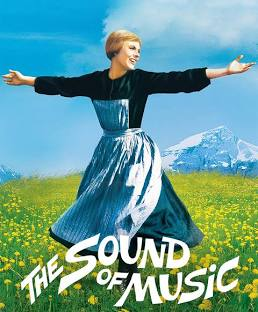
The Sound of Music (1965)
The Sound of Music has always been to me a fascinating example of how a movie can wrap up a deep political trauma into romanticized escapism. It is little wonder it is so detested in Austria. It is in particular one of the few mainstream Hollywood musicals where an entire nation's not just collective complicity but active participance in World War II is reframed as the story of gentle, principled resistance centered around folk songs and family values pushing back against the nazi menace in a ‘quiet’ resistance. For me the film is an excellent example of the tendency to dissociate Austrian traditional culture from the political reality of the Anschluss and their behavior during WW2 by reinforcing the ‘first victim’ myth. By combining the looming Nazi invasion with Alpine vistas, pristine abbeys, and harmonious, joyful sing-alongs, it creates a sense of a pure Austria somehow “lost” to nazism. This decision to keep the systemic enthusiasm and widespread local support for annexation entirely off-screen highlights just how deeply the narrative dissociation runs. The contrast of the joyful innocence of the edelweiss and the children's singing being framed as a pure expression of Austrian patriotism and the casual adoption of Nazi armbands by neighbors and household staff is a striking juxtaposition that sits quietly in the background of the film. Sound of music is a profound example of cultural selective memory where what truly matters in this framed narrative is that Austria remained an innocent land of music and flowers that escaped the taint of the neighboring Nazi menace.
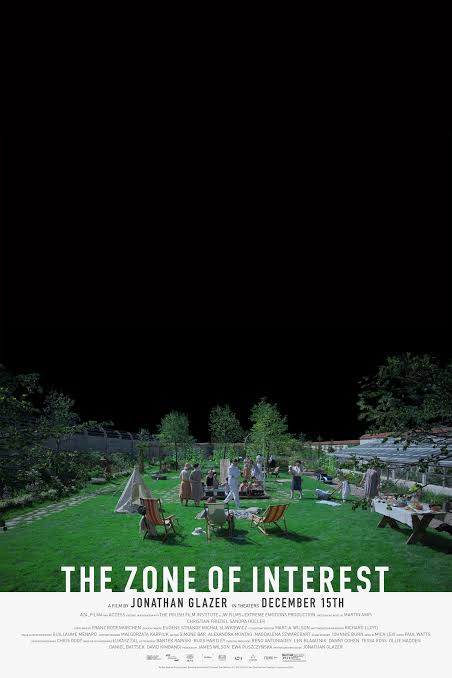
The Zone of Interest (2023)
I found the zone of interest to be quite the intriguing take on ‘average’ German's life during WW2. It is in particular one of the few examples of film I’ve seen where the regular German people, the families of officers in this case, are not only aware of the final solution but discuss and even joke about it. It also well displays the nature in which the German’s industrialized genocide, not only casualy but with almost with a certain pride. I also found the decisions to avoid showing the victims on the screen emphasized how deep the dissociation ran between the actions being taken and the true morality of those actions. And the juxtaposition of the flowers with the screams, and the regular conversation over gunshots in the background, was truly horrifying. I think the movie did an excellent job of capturing just how deep the cognitive distancing went for people, in particular the scene where the wife of Rudolf Hoss has learned he is to be transferred but demands that she and their children be allowed to remain at their home in Auschwitz because it is their living space, something they dreamed of having together since they were teens. It doesn’t matter that one of the worst atrocities in human history is being perpetrated less than 100 feet away, easily within ear shot of them and their children, it only matters that this place is their home, and they wouldn’t trade it for the world.

I Have Never Forgotten You: The Life and Legacy of Simon Wiesenthal (2006)
I Have Never Forgotten You is a case study of how a single individual committed to justice, above all things, can be the force that prevents and breaks down the systemic efforts of some to try to bury their wartime guilt. The documentary focuses on the relentless act of memory itself, and how one man’s, Simon Wiesenthal’s, lifelong pursuit of the Nazi perpetrators responsible for the holocaust, awoke bad memories for a society all too eager to embrace a collective amnesia. In chronicling Simon Wiesenthal’s pursuit of former Nazis living comfortably in plain sight, it contrasts the deep and immediate moral imperative of holding these fascists with some accountability against the total apathy of postwar states frustratingly reluctant to disturb their own fragile peace. The decision made with the documentary to not frame his work merely as a quest for vengeance, but as a personal mission to remember, a personal mission rising from a deep seated passion and hatred that could never be uprooted and could never be quashed and would never relent. This documentary for me found a way to capture the profound struggle of Wiesenthal’s life, a struggle over remembering history, finding justice, and having responsibility. The most important message from the film for me is Wiesenthal’s idea and insistence that silence is a form of betrayal. It doesn't matter and will never matter that time naturally distances societies from the crimes of their past; what matters is that true justice requires an unyielding refusal to let a nation comfortably forget its perpetrators.

The Devil's Bath (2024)
The Devil’s Bath is a deeply disturbing and uncanny exploration of how rigid religious dogma can and will twist human suffering into various horrific forms of self-preservation, whether that be of the body or the soul. Unlike other period films that will typically treat historical horror as a supernatural or distant force, The Devil's Bath instead roots its terror entirely in the unbearable psychological trap of the reality of 18th-century rural Austria. In the film there is a deep tension between how deep internal despair can rot the person and how severely the oppressive structures of village life may restrict their avenues of getting help. In focusing on Agnes’s descent into a profound depression and its symptoms it highlights the brutal consequences of a cultural worldview that offers no exit for the broken peoples as their condition is viewed by society not as an illness, but rather as a moral failing.
Centering the film around the historical phenomenon of suicide by proxy, where dinfranchised suicidal people murdered children, as children did not yet know sin, to guarantee they could confess and be executed rather than face eternal damnation as a result of suicide, touches the paradoxs of faith, that it is better to suffer here and be saved “there” rather than to try to save yourself here at all. The church’s sense of absolute moral authority is ultimately the same thing that creates the desperate, twisted logic forced upon those like the main character seeking a method to end their misery.


Comments