August 24-25 United Nations IAEA

August 24 Monday
While today is meant to be another proper free day I have instead elected to spend most of my day enjoying my rituals before taking some time to prepare for our visit to the IAEA (international atomic energy agency) tomorrow. In preparing for this visit I've taken some time, as prompted, to do research on how the UN and the IAEA are covered in the international news. In particular I noticed just how easy it was to find a plethora of articles on the UN and IAEA with heavy emphasis in the news on the IAEA's own emphasis on managing nuclear safety within active conflict zones and the practice of non-proliferation. Proliferation as far as I understand is the development of a conflict in term of the scales of arms used, beginning with small arms and eventually (potentially) devolving in full scale nuclear conflict. This brings up one significant question I have for tomorrow on how does the IAEA manage non-proliferation and what kind of incentives are offered or what kind of threats are levied to prevent the scaling up of weapons used in a conflict.
I am also hoping tomorrow to be able to talk to someone about a future career in international diplomacy. Vienna as the cross-roads of Europe is a major diplomatic capital, how does one get a start in a career that would lead them to working in a place like the UN in Vienna is something I would be very interested in learning. Other discussion topics for tomorrow for me include how does the IAEA manage its own needs and mandates when states are possessed of sovereignty and can restrict access to their nuclear sites on various grounds in particular during times of conflict. A follow up question to that is what kind of technologies does the IAEA to monitor nuclear development in restrictive countries and or how far are they willing to push to monitor. My final question I am thinking I would like to have answered tomorrow how does the IAEA aid smaller member states of the UN with developing their nuclear energy infrastructure.
August 25 Tuesday

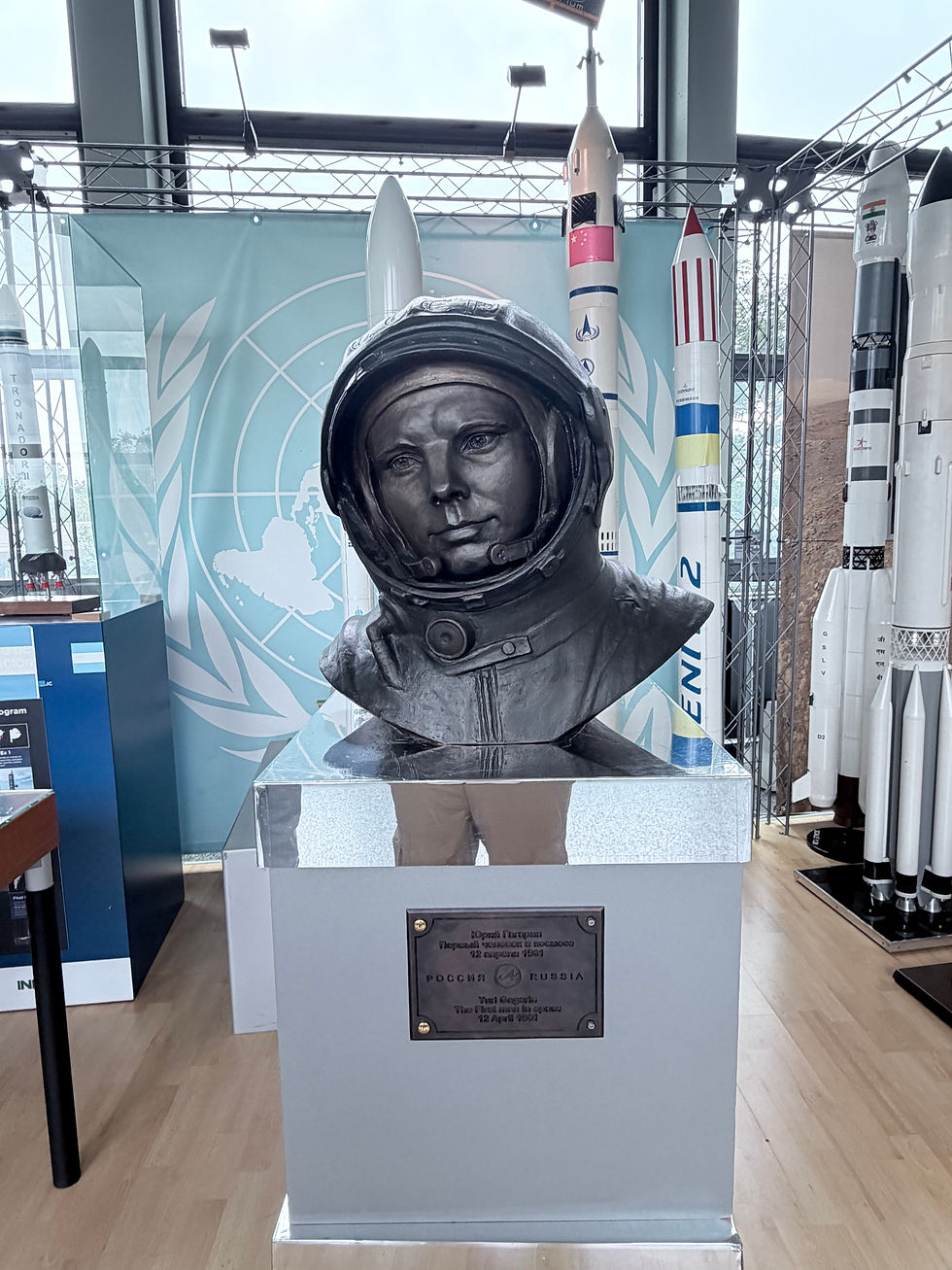
Today was our long (and much) awaited trip to the United Nations office in Vienna, the Vienna International Center. The VIC is one of the four main UN offices around the world, home to many agencies of the UN but most importantly for us on this visit would be the IAEA. The three other main offices of the UN are the general assemble and secretariats office in Manhattan, the major international hub in Geneva, and the UN headquarters in focused on evirnoment and social welfare. Constructed in the 70s the building was the result of an art contest (as we learned on our tour) won by Austrian architect Johann Staber who blew the competition out of the water most specifically for the variablity and flexibility of his design allowing for the UN to adjust it as needed. The property is nearly 200,000 acres and was officially leased to the UN in 1979 at the symbolic price of one schilling, now just 7 euro cents, a year, for 99 years.
After our tour of the grounds and a brief seminar on the history and functions of the IAEA we were allowed to lunch in the UN cafeteria where I had the oppurtunity to speak with two young Ukranian women who worked specifcally in the non-proliferation section of the IAEA's nuclear management. From them I had the oppurtunity to ask some of my questions I formed yesterday. Firstly, how does the UN manage its monitoring mandates against sovereign states that might restrict access during times of high international tensions or active geopolitcal conflict, they said to this that the best and primary avenue, as international law recognizes national sovereignty, is to rely on diplomatic negotiations and the hope that resolutions can be brought forward in order to facilitate the demands of the state and the IAEA's own need to monitor. They were not particullary familair with the specific technology employed in the monitoring of nuclear technologies but they could tell me about the developemtn of nuclear grid infrastruture in developing member states. As a part of helping developing states develope their own nuclear infratstructure there is a 19 point issue framework on the safe proliferation of nuclear energy within a state without the risk of the development of nuclear weapons.
In total the trip to the United Nations was perhaps shorter than I expected although I can understand why after learning that the VIC hosts more than 3000 conferences a year, so as well as being the largest private employer within the city of Vienna they are also receiving more visitors on a regular basis than anywhere in the city meaning it is in essence one of the busiest places in an already very busy daytime city.


Comments